
Have you ever wondered if you can get real OLED quality without spending a fortune? We tested budget-friendly models to see if they deliver the rich colors and deep blacks you’d expect from pricier sets. In our tests, options like the LG B4, LG C5, Panasonic Z95B, and Samsung S95F held up well against higher-cost competitors.
Our guide shows that you can enjoy a great OLED experience without the high price tag. Read on to discover which models offer the best balance of performance and value.
Top Budget OLED TVs at a Glance

We've tested some budget OLED TVs that deliver high-quality visuals without costing a fortune. Here are our top picks:
- LG B4 is our entry-level option for 2024. It shows vibrant colors and deep blacks, making everyday viewing a pleasure. With four HDMI 2.1 ports, it easily handles gaming but has a lower peak brightness than more expensive models.
- LG C5 costs $1,696.99 and comes in sizes from 42″ to 83″. Its Alpha 9 Gen 8 AI processor boosts Filmmaker Mode brightness to 1,180 nits and supports 4K at 144 Hz with VRR (including FreeSync Premium and Nvidia G-Sync), ALLM, and Dolby Vision on every HDMI port.
- Panasonic Z95B uses a four-layer OLED panel that reaches up to 2,107 nits in HDR. It delivers accurate colors and features a built-in 360 Soundscape Pro by Technics, making it ideal for dim viewing environments.
- Samsung S95F is designed for bright rooms with its OLED Glare Free 2.0 screen. It supports 4K at 165 Hz with VRR (AMD FreeSync Premium and Nvidia G-Sync) in a remarkably thin design. However, it occasionally shows black crush and does not support Dolby Vision.
| Model | Price (at publication) | Peak Brightness | Strength |
|---|---|---|---|
| LG B4 | ~$1,000 | 950 nits | Vibrant colors, deep blacks, HDMI 2.1 gaming support |
| LG C5 | $1,696.99 | 1,180 nits | Wide size range and advanced gaming features |
| Panasonic Z95B | ~$1,700 | 2,107 nits | Outstanding HDR brightness and excellent sound |
| Samsung S95F | ~$1,700 | ~1,400 nits | Glare-free performance and bright room optimization |
In-depth Reviews of Value-priced OLED Displays

We picked these models because they offer great picture quality and handy gaming features at a price that won't break the bank. Each display does a solid job balancing brightness, accurate colors, and decent sound.
LG B4
The LG B4 is our go-to entry-level OLED for 2024. It shows deep blacks and vibrant colors that make everyday videos look more enjoyable. The panel comes with full HDMI 2.1 support, which lets you play 4K content smoothly. However, its peak brightness isn’t as high as pricier options. The built-in speakers work okay, but they miss the extra bass that movie scenes often need. Overall, the LG B4 offers reliable performance at an affordable price, even if it could use a boost in brightness and sound.
LG C5
At $1,696.99 and available in sizes from 42 to 83 inches, the LG C5 packs a lot of features into a smart package. It is powered by the Alpha 9 Gen 8 AI processor and can hit up to 1,180 nits in Filmmaker Mode (a setting that aims for true-to-life color). This display handles fast content smoothly with 4K at 144 Hz and variable refresh options like FreeSync Premium and Nvidia G-Sync. Extra gaming perks like ALLM (Auto Low Latency Mode) and Dolby Vision across every HDMI port make it a strong pick for both movie lovers and gamers.
Panasonic Z95B
The Panasonic Z95B uses a four-stack OLED panel that reaches up to 2,107 nits in HDR, delivering vivid brightness even in dark scenes. It is known for excellent color accuracy, which is perfect if you often watch content in dim settings. With built-in 360 Soundscape Pro tuned by Technics, this TV provides rich audio that works best in lower light. If you favor a setup that minimizes the need for extra speakers in a dark room, this one is a solid buy.
Samsung S95F
The Samsung S95F is designed with bright rooms in mind, thanks to its OLED Glare Free 2.0 screen. It also supports 4K at 165 Hz along with VRR options from AMD FreeSync Premium and Nvidia G-Sync, making it great for fast-paced gaming. Its sleek, ultra-thin design and strong color performance deliver clear, sharp images. There are some tradeoffs, though: you might notice a bit of black crush and the lack of Dolby Vision may be a downside if you’re after a cinema-like experience.
Key Features of Economical Organic-light Displays
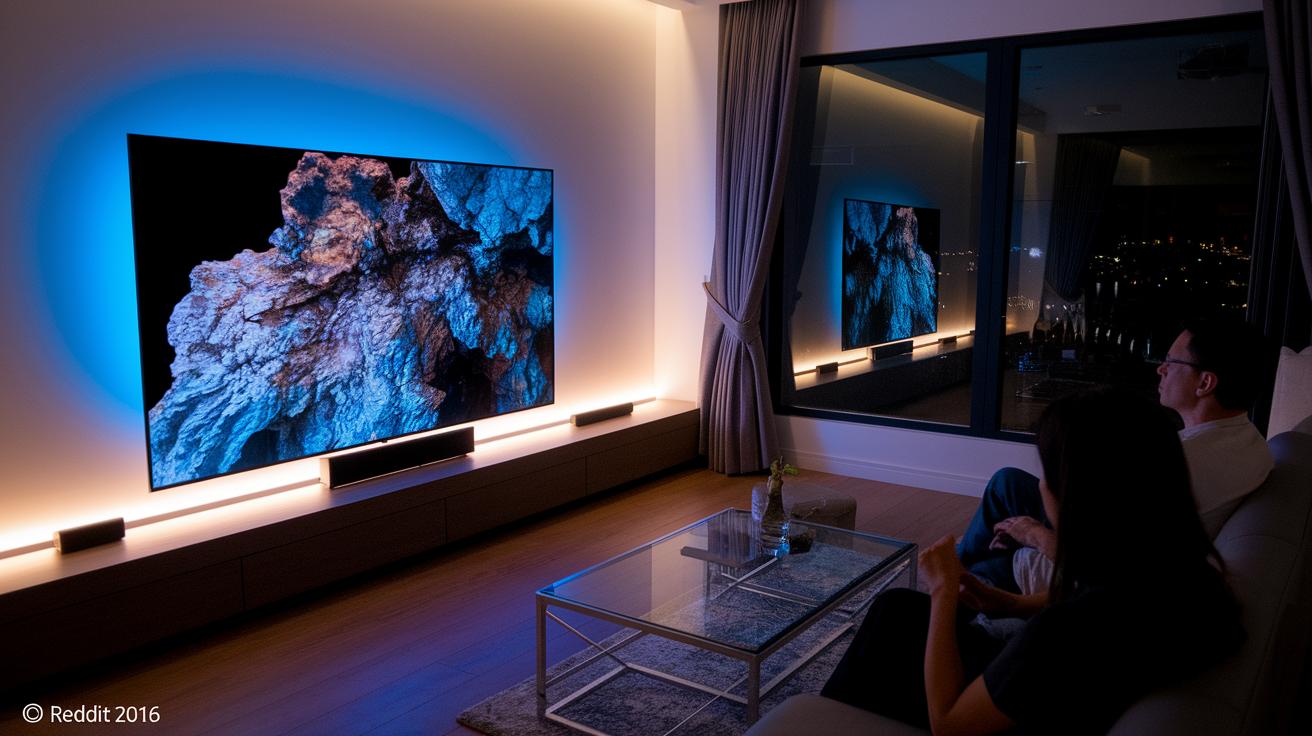
Economical OLED TVs promise great dark-scene performance thanks to self-emissive pixels that create deep blacks. Imagine watching a movie where each shadow looks real because every pixel turns off on its own.
These models offer different brightness levels. Cheaper sets work best in dim rooms, while pricier options shine brightly in well-lit spaces without losing details.
They come with features that suit gamers too. With smooth 4K refresh rates and variable refresh rate (VRR, which helps reduce screen tearing), these TVs handle fast action very well. It's like tuning a racecar so that every control feels spot-on.
Smart platforms and a range of sizes make it easy to find a fit for any space. Whether you need a smaller screen or a huge immersive display, there’s an option that works for you.
Price is still a major factor. Entry-level models start around $1,000 US, while mid-range and premium versions boost brightness and gaming features for those who need extra performance.
Budget OLED vs QLED: Low-cost High-resolution Showdown

In the budget display arena, OLED and QLED each shine in their own way. OLED panels deliver true blacks through pixel-level dimming, which means colors stay accurate even when you're not looking straight on. QLED screens, however, typically offer higher peak brightness that works well in bright room settings. Although QLED TVs might start at a lower price, recent price drops in OLEDs make them a strong choice for those who value deep contrast and uniform colors for a cinema-like feel.
| Feature | OLED | QLED |
|---|---|---|
| Contrast & Black Levels | True blacks with pixel-level dimming | Struggles with dark scenes |
| Brightness | Even brightness across the screen | Higher peak brightness for well-lit surroundings |
| Color Accuracy | Accurate colors out of the box | Vivid colors enhanced by quantum dots |
| Price | Competitive with mid-range QLEDs | Usually more affordable for entry-level models |
| Viewing Angles | Keeps color and contrast when viewed off-axis | Shows visible shifts when not centered |
Overall, if you need brightness and a lower entry cost, QLED might be the way to go. But for those who value rich contrast and precise color accuracy in darker settings, OLED offers a better deal.
Where to Find Deals on Underpriced Signature Screen Series

Entry-level OLED TVs now start around 1,000 US dollars (about £900 or AU$1,500), which gives buyers on a budget a way to enjoy quality displays without a high price tag. These models deliver clear picture quality and all the basic features you need for a great viewing experience.
Mid-range models often drop by 10 to 15 percent during seasonal sales events. Retailers and manufacturers offer discounts during Black Friday, Cyber Monday, and year-end clearances. Popular options like the B4 and C5 series become an affordable pick, bringing bright and vivid imagery to tighter budgets.
Certified refurbished or open-box units can lower the cost even more, while still keeping warranty coverage intact. This means you can secure a high-resolution TV that meets performance standards and offers an immersive viewing experience without overspending.
Final Words
In the action, we recapped each standout model and detailed how each meets unique viewing and gaming needs. We walked through key performance measures such as contrast, peak brightness, and smart features that help guide your choice.
We also explored tech comparisons with QLED and shared practical tips to hunt for discounts during seasonal sales.
This guide aims to provide clarity and confidence when shopping for the best budget oled tvs. Enjoy your new viewing experience and choose with confidence.
FAQ
What are the best budget OLED TVs for the money?
The best budget OLED TVs combine great picture quality, deep blacks, and gaming-ready features without a high price tag. Options like LG B4, LG C5, Panasonic Z95B, and Samsung S95F are praised for value in 2025.
What are the best OLED TVs in the 55-inch category?
The 55-inch OLED TVs provide a well-balanced mix of size and performance, offering vivid colors, smooth motion, and gaming features. Models like LG C5 and Samsung S95F deliver a strong mid-size viewing experience.
What should I know about the Samsung S95F OLED?
The Samsung S95F OLED stands out with a glare-free display ideal for bright rooms and fast refresh rates up to 165 Hz. Its ultra-thin design is great for gaming, even though it lacks Dolby Vision.
What are the key features of the LG G5 OLED TV?
The LG G5 OLED TV offers impressive picture quality with deep blacks, vibrant colors, and robust smart features. It also supports essential gaming functions, making it a strong pick for premium visuals at a competitive price.
Is OLED really better than QLED?
OLED is better than QLED in delivering true blacks and accurate colors, thanks to its self-emissive pixels. While QLED panels can reach higher brightness, they cannot match OLED’s uniform dark-scene performance.
Is it worth spending money on an OLED TV?
Spending money on an OLED TV is worthwhile for its superior contrast, deep blacks, and precise colors. This imaging technology excels in dark-room viewing and immersive gaming, providing excellent overall picture quality.
Who is considered the king of OLED TV?
Many reviews crown LG as the king of OLED TVs due to its consistent high performance, innovative features, and reliable picture quality across various sizes and price points.
