
Ever wonder if your OLED TV might lose its spark too soon? These screens are often praised for their bright colors, but our tests show they typically last between 65,000 and 100,000 hours. With proper care, like setting the brightness at an optimal level, your OLED can stay vivid for over 10 years. We looked at how everyday use and factors such as room temperature affect its lifespan, so you know what to expect and how to keep your TV looking its best.
Average OLED TV Lifespan in Hours and Years

OLED TVs are built for long-term use and are expected to run for 70,000 to 100,000 hours under normal viewing conditions. That works out to about 8 to 12 years if you watch for roughly 8 hours each day. These estimates come from lab tests and manufacturer ratings, giving a solid benchmark for modern screen life.
Manufacturers often rate OLED panels to hold 50% of their original brightness after 50,000 to 100,000 hours. In theory, this means the display could still work adequately for 17 to 34 years at 8 hours a day. For a clearer explanation of how self-emitting pixel technology works (each pixel produces its own light), check out how do oled tvs work. This brightness retention test is a key part of the design standards many manufacturers follow.
Real-world tests, including those by Consumer Reports in 2023, show that mixed daily content tends to shorten the lifespan to between 65,000 and 85,000 hours. High brightness settings can speed up pixel wear, so it pays to manage brightness carefully. Keeping the TV at a moderate brightness and avoiding long static images can help your OLED TV last well over a decade.
how long do oled tvs last: Enduring Brilliance

OLED TVs use self-emitting pixels that slowly wear out based on how you use them and the environment they’re in. Keeping the brightness and voltage at moderate levels and avoiding harsh settings can help extend the TV’s life. We found that a few key factors play a role in how long your display stays sharp and vibrant.
- Brightness and voltage levels
- Blue subpixel fatigue (blue pixels wear out 1.5x to 1.8x faster than red or green)
- How long the TV is used and if static images are shown for extended times
- Extremes in temperature
- High humidity or moisture
- Panel size and the amount of power drawn
When you crank up brightness, the pixels work harder, and the increased voltage can lead to faster wear. Keeping static images on the screen for too long might cause burn-in, where parts of the image become permanently faint. Additionally, very high or low temperatures cause material stress, and moisture can seep in to weaken the panel over time. Larger screens draw more power, which can add to overall wear. By moderating brightness, using screen savers, and keeping your room at a steady temperature and humidity, you help your OLED TV hold up better over time.
OLED vs. Other TV Technologies: Lifespan Comparison
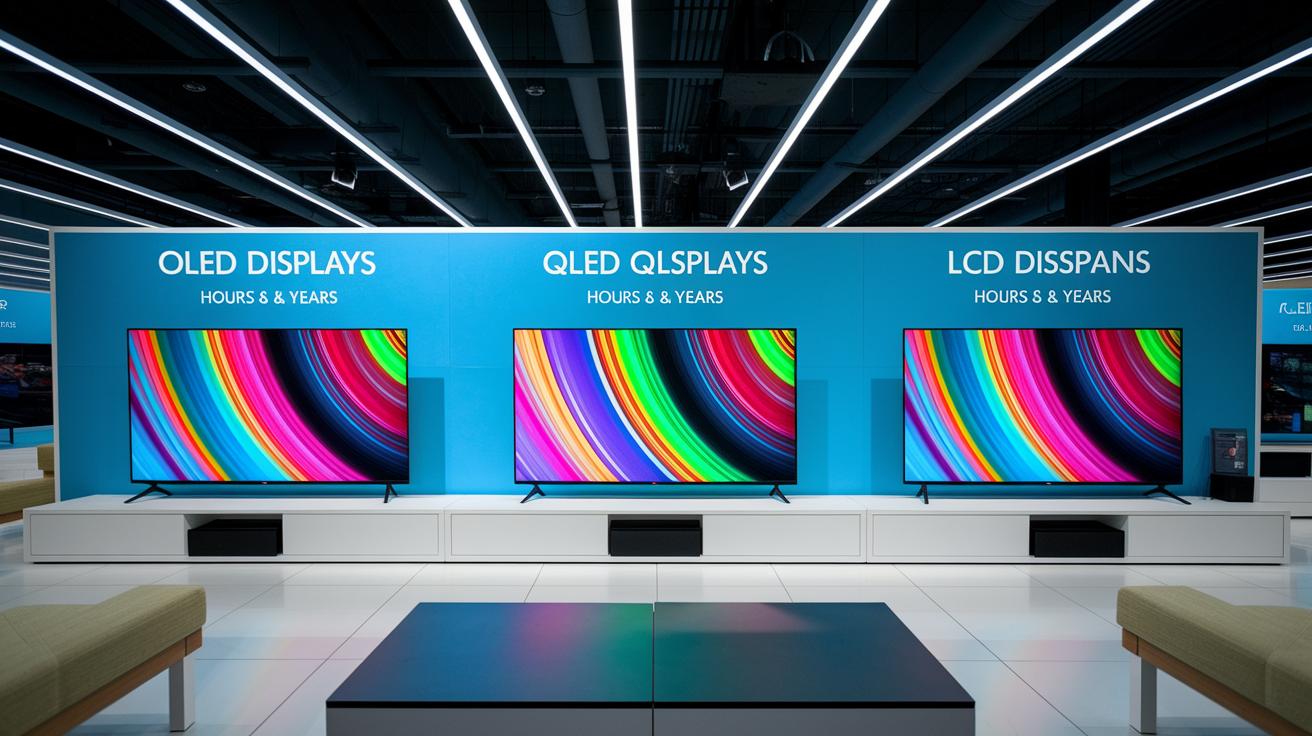
OLED TVs typically last between 70,000 and 100,000 hours. If you use your TV for about 8 hours a day, that translates to roughly 8 to 12 years of life. In contrast, 4K QLED TVs generally get around 70,000 hours, while regular LCD/LED models offer between 30,000 and 60,000 hours, or about 4 to 6 years under the same conditions. Each type of display uses different techniques that affect these numbers.
| Display Type | Lifespan (Hours) | Equivalent Years (@ 8 h/day) |
|---|---|---|
| OLED | 70,000–100,000 | 8–12 |
| QLED | ~70,000 | 8–10 |
| LCD/LED | 30,000–60,000 | 4–6 |
Here, OLED displays shine because their pixels light up on their own. This means they don’t rely on backlights that can wear out over time as they do in LCDs. QLED TVs come close but still don’t match the long life that OLEDs can offer with regular use. LCD/LED screens work well for a few years, but their lifespan is noticeably shorter. If longevity is important to you, OLED is worth considering.
Maintenance and Usage Tips to Prolong OLED TV Life
Keeping your OLED TV in top shape starts with a little routine care and smart use. Regular upkeep not only keeps the picture clear but also helps prevent issues like burn-in and uneven pixel wear. Use moderate display settings and keep the TV in a stable environment to lessen stress on the screen. Think of it like giving a hardworking appliance a break, a short pause now and then can really extend its life.
Managing brightness is also very important. We recommend keeping the brightness setting below 80 and aiming for around 150 nits peak. This reduces stress on the pixels, especially the blue ones that work harder. Clean the screen gently with a soft, dry cloth and avoid exposing it to extreme temperatures. Turning off the TV when you're not watching gives the internal parts a chance to cool down and rest.
Don’t forget about firmware updates and built-in screen-health features. Modern TVs include tools like pixel-shift (which moves images slightly to avoid burn-in) and automatic brightness controls that help balance static images. Regular firmware updates keep these features working well and enhance overall performance. By sticking to these easy maintenance tips and using your TV wisely, you ensure it stays reliable and delivers great picture quality for years.
Strategies to Prevent Burn-In and Image Retention on OLED TVs
OLED TVs use tiny self-lighting pixels that can suffer burn-in if a fixed image stays on too long. To lessen this risk, manufacturers add features like pixel shifting, screen savers, and brightness controls. For more details, see the Maintenance and Usage Tips section.
Pixel-Shift Technology and Screen Saver Features
Many TVs now include smart pixel-shift methods that slowly move static elements on the screen. This gentle movement helps prevent any one pixel from being overworked. Additionally, a built-in screen saver activates during idle times, keeping fixed images from causing damage.
Brightness Control and Content Management
Managing brightness is key to extending your TV’s life. Automatic brightness controls lower the light output during very bright scenes to reduce stress on the pixels. Rotating your content and avoiding long periods of unchanging images also help maintain screen quality.
By using these methods together, small pixel movements, active screen saving, and smart brightness limits, OLED TVs can keep showing clear and vibrant pictures for longer.
Brand-Specific OLED TV Longevity and Reliability Insights

LG and Philips models have been shown to work reliably for more than 10 years when properly cared for. Their panels benefit from ongoing improvements in self-emitting technology (where each pixel lights itself) and better materials that help extend their life. In both lab tests and everyday use, these premium models consistently outlast many competitors, lasting well beyond initial expectations.
Sony’s newest blue-OLED panels now show improved stability, addressing past issues where blue pixels faded faster. Samsung models have also proven their endurance, with tests clocking between 70,000 and 80,000 hours, translating to many years of use when maintained well. On the budget side, TCL panels usually last around 7 years, and Hisense models are typically rated for about 8 years, making them solid mid-range choices in terms of durability.
Some manufacturers even offer warranties that cover problems like burn-in (when a static image leaves a lasting mark), with repair costs ranging from $200 to $500. This added warranty can give you extra peace of mind, especially if you often use the TV for long periods or at high brightness. Ultimately, investing in brands with strong durability records can be a smart move, as lower repair costs and warranty coverage help improve the overall value in the long run.
Final Words
In the action, we covered typical OLED lifespan figures and what they mean in everyday use. We broke down brightness management, maintenance tips, and burn-in prevention that all impact durability. Practical comparisons showed how care and usage influence overall performance. We even looked at brand insights and warranty considerations to help simplify your decision. This guide serves as a clear, data-driven answer to how long do oled tvs last, leaving you confident and prepared for a long, satisfying viewing experience.
FAQ
How long do OLED TVs last in hours and years?
The lifespan of OLED TVs is generally 70,000–100,000 hours, which translates to about 8–12 years when used around 8 hours a day.
What is the expected lifespan and brightness retention for OLED panels?
OLED panels typically reach 50% brightness after 50,000–100,000 hours, meaning they can sustain good performance for many years when usage is moderated.
How does the longevity of OLED TVs compare to QLED and LED TVs?
OLED TVs usually last 70,000–100,000 hours, similar to QLED models, while traditional LED/LCD TVs often have a shorter lifespan due to backlight degradation.
How long do OLED monitors last before burn-in, and do OLED TVs burn out fast?
OLED monitors and TVs do not burn out quickly; careful brightness control and avoiding static images help minimize burn-in risks over time.
What is the lifespan of Samsung OLED TVs?
Samsung OLED TVs follow standard OLED lifespans of around 70,000–100,000 hours, though actual durability depends on user settings and usage patterns.
How long do Mini LED TVs last?
Mini LED TVs typically last between 30,000 and 60,000 hours, reflecting the durability of their backlight technology compared to self-emissive panels.
How often should I replace my OLED TV?
Consider replacing your OLED TV after 8–12 years or if you notice significant brightness loss or burn-in symptoms, as proper care can help extend its effective life.
